Are you facing a problem of rodents?
You need rodent control! ABS Pest Control offers the only effective solution to rodents.
Know more Enquiry Now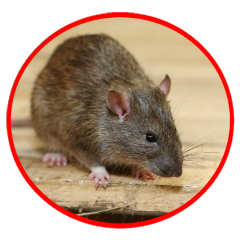

Most rodents are small, weighing 150g (5.0oz) or less.There are only a few large species of which the largest, the capybara, may weigh up to 66kg (146lb). All rodents have characteristic teeth, including a single pair of razor-sharp incisors. With these teeth the rodent can gnaw through the toughest of husks, pods and shells. Rat bites, particularly in urban areas, may be a serious health problem. Rat bites develop rat-bite fever, a bacterial disease carried in the teeth and gums of many rats. Rats can spread Salmonella food poisoning, Weils disease (leptospirosis), trichinosis, and other diseases directly through contamination of food and water with their urine and feces.
Indirect effects. Rats may indirectly spread a number of serious human diseases by way of fleas and mites, most notably plague and murine (scrub) typhus fever. Some of the diseases can be fatal to humans.
Rabies. Rats have never been found to be infected with rabies in nature, and rabies transmission has never been documented in the United States. The United States Public Health Service recommends against anti-rabies treatment in the case of rat bite.
The snap trap is an effective method of killing rats when used correctly. Traps are especially useful when you wish to avoid the use of poisons, to eliminate bait shy or bait resistant rats, to avoid odors from dead rats in inaccessible places, or to collect live rats for ectoparasite or resistance screening. The best traps are those with expanded triggers (treadles) set for a light touch. Set the traps along runways with the trigger towards the wall, or tie the traps to pipes or rafters or wherever droppings, gnawing, grease marks, and other evidence of activity is found. The number one mistake in using traps is not using enough. (See Environmental Protection Agency [1991] for information on trapping).
• Glue Boards: Glue boards are used much like snap traps. Secure the glue board with a nail or wire so it can't be dragged away. Be aware that some people may protest the use of glue boards as inhumane, since the rat may struggle for some time.
• Tracking Powders: These are rodenticides mixed with a talc or powdery clay and applied into areas where rats live and travel. The powder sticks to the rats' feet and fur and is swallowed when the rats groom themselves. Tracking powders are effective even where food and water are plentiful. The rodenticide in tracking powders is 5 to 40 times more concentrated than in baits. Avoid applying tracking powder where the powder could become airborne and drift into nontarget areas, or where other nontarget animals may come in contact with it.
• Fumigants: Several fumigants are available for burrow fumigation. Most are extremely hazardous and should only be used by experienced professionals. National Park Service policy for rat management emphasizes rodent-proofing rather than the use of rodenticides. Consult your regional Integrated Pest Management coordinator when considering their use.
Get free quote now for Rodent Control Service.
Enquiry Now